
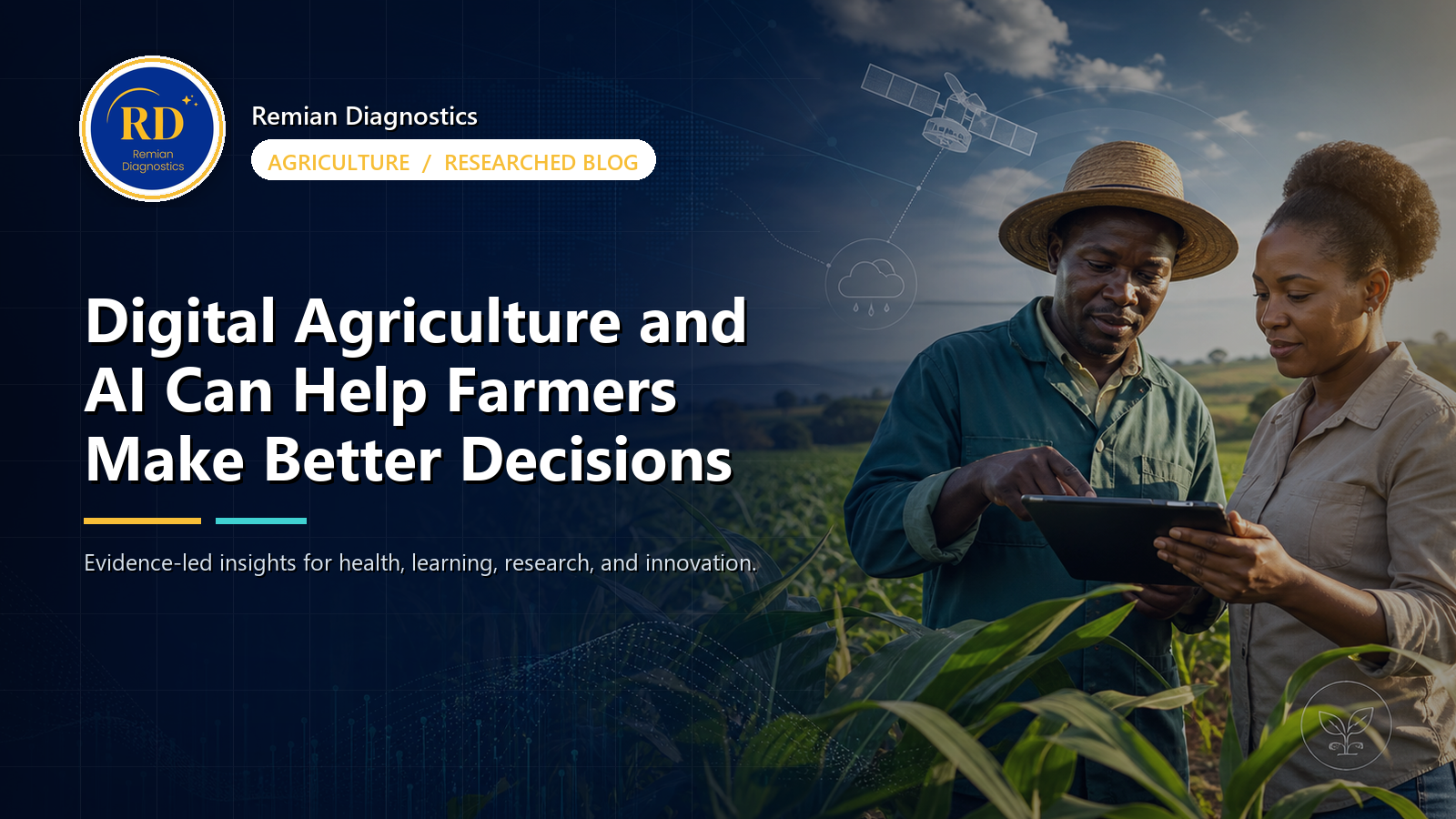
Agriculture is becoming more data-driven, and digital tools can help farmers respond to climate, market, pest, and productivity challenges.
What digital agriculture can do
Digital agriculture includes tools such as weather alerts, market information, digital advisory services, satellite monitoring, mobile extension, farm records, remote sensing, and AI-supported decision-making. These tools can help farmers plan planting, manage inputs, reduce losses, and access buyers more efficiently.
The Food and Agriculture Organization highlights digital agriculture and AI as important for transforming agrifood systems. This transformation is not only about large commercial farms. Smallholder farmers can also benefit when tools are affordable, localized, and easy to use.
Climate pressure makes information urgent
Farmers are already dealing with shifting rainfall, pests, soil degradation, and market uncertainty. Timely information can reduce risk. A weather alert, pest warning, or market update may change what a farmer plants, when they harvest, or where they sell.
Digital tools can also support extension officers by helping them reach more farmers with targeted guidance. Instead of one-size-fits-all advice, data can make recommendations more specific to crop, location, soil, and season.
The human side of innovation
Technology will not solve agriculture challenges by itself. Farmers need trust, training, financing, infrastructure, and tools that match local realities. A service designed without farmers may fail even if the technology is advanced.
The better approach is participatory. Farmers, extension workers, researchers, private innovators, and government agencies should co-design solutions that improve productivity while protecting livelihoods, data rights, and environmental sustainability.
Key takeaways
- Digital agriculture can support better decisions on climate, inputs, pests, and markets.
- Smallholder farmers need tools that are affordable, local, and simple to use.
- Technology should be combined with extension, training, and farmer participation.
Sources reviewed
This article is an original Remian Diagnostics educational post prepared from public, reputable sources. It is not copied from the linked references.