
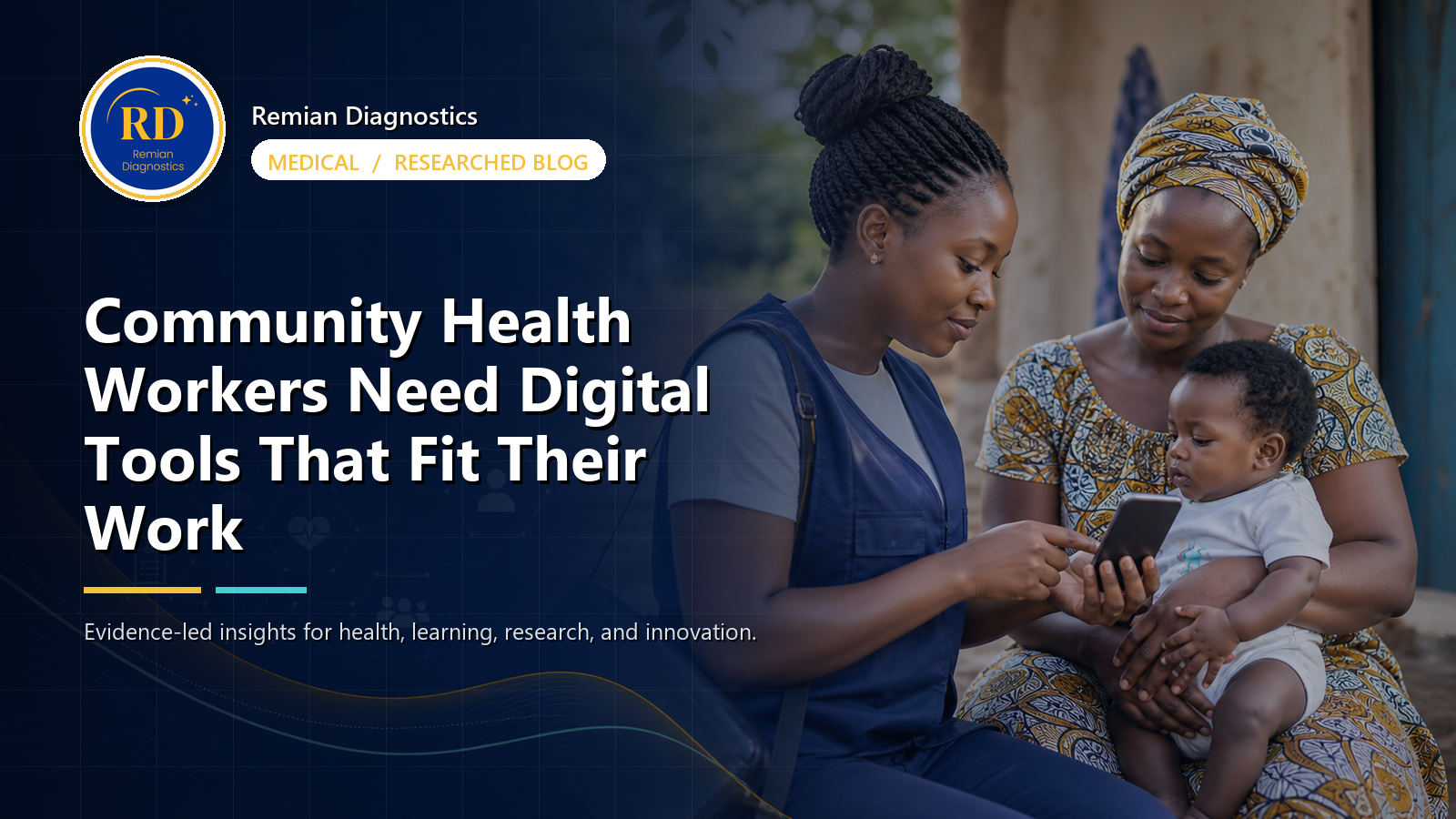
Community health workers are often the first link between households and formal health services. Digital tools can strengthen that link when they are designed around real field conditions.
Why community health matters
Community health workers support health promotion, disease prevention, referral, follow-up, health education, and basic service delivery. In many communities, they are trusted because they understand local realities and can reach households that formal facilities may not reach quickly.
Their work can be limited by paper forms, weak reporting channels, stockouts, lack of transport, poor supervision, and delayed feedback. Digital tools can help, but only when they reduce the burden rather than adding another reporting layer.
What good tools should provide
A strong community health tool should support registration, visit tracking, decision prompts, referral, stock visibility, supervision, and timely data reporting. It should work in low-connectivity settings and use simple workflows that match how community health workers actually serve households.
PATH's work in Zambia shows the value of designing with community health workers and health teams, rather than designing for them from a distance. Human-centered design is not a slogan. It is how teams discover what will actually be used.
Data should come back to the community
Digital reporting is more meaningful when data is used for action. If community health workers submit information but never see decisions or improvements, motivation can decline. Feedback loops matter.
The best systems help supervisors identify gaps, help facilities plan supplies, and help communities understand health trends. When digital tools strengthen both service delivery and decision-making, community health becomes more visible and more valued.
Key takeaways
- Community health workers need tools that reduce workload and improve follow-up.
- Low-connectivity design and simple workflows are essential.
- Data should support local decisions, not only upward reporting.
Sources reviewed
This article is an original Remian Diagnostics educational post prepared from public, reputable sources. It is not copied from the linked references.